Iran confirms supreme leader Khamenei is dead after US, Israeli attacks.

What's happening?
- Iran's Supreme Leader Ayatollah Ali Khamenei is dead, state media report
- US President Donald Trump called it greatest chance for Iranians to 'take back their country'
- Israel and US launched massive strikes on Iran
- Iran retaliates with hits reported in Israel and Gulf states
- In Iran, attacks trigger fear and panic as people flee cities
Air raid sirens sound across Israel
10 minutes ago05:48 CETAlexander CornwellShortly after 6 a.m., air raid sirens repeatedly sounded across Israel, warning residents of an incoming attack.In Tel Aviv, a series of explosions were heard as Israel’s sophisticated air defense system sought to intercept the latest Iranian offensive.There was no immediate reports of any damage or injuries.
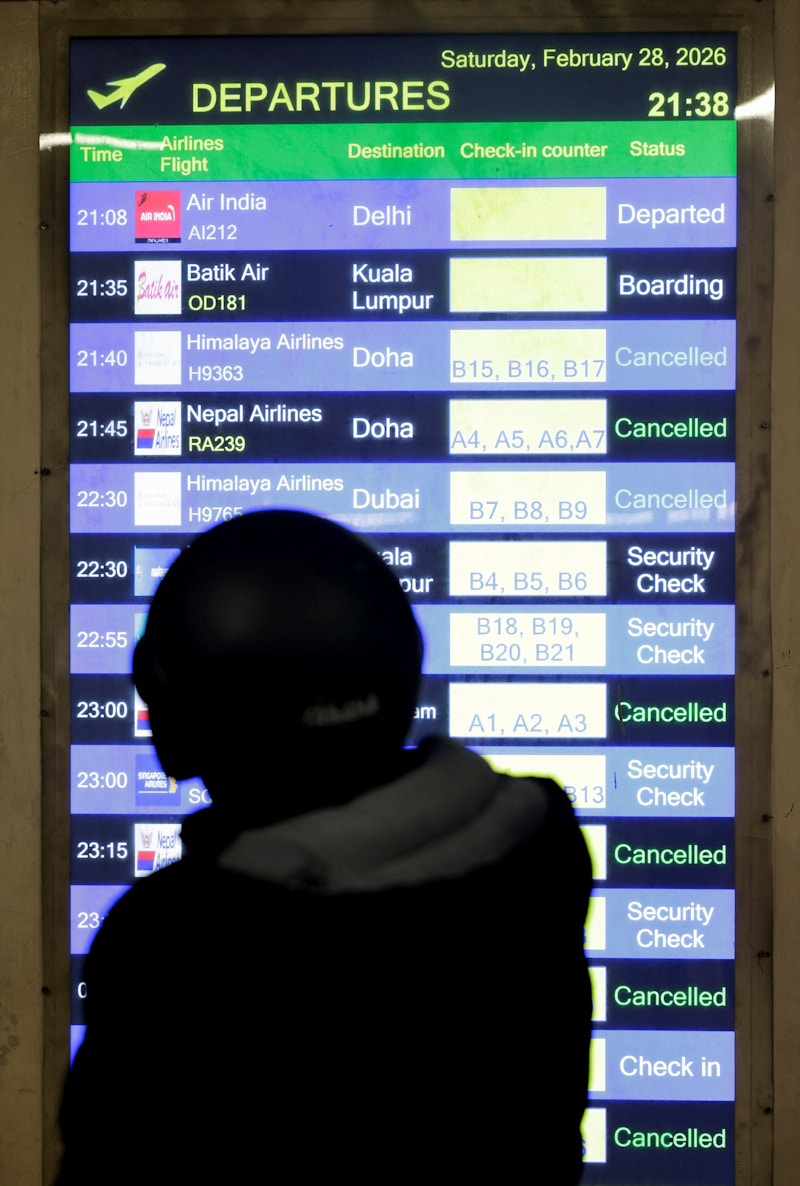
Flight information at Nepal's Tribhuvan International Airport showing cancellations, February 28, 2026. REUTERS/Navesh ChitrakarThe Iran crisis has unleashed one of the most severe disruptions to global aviation in years.Major Middle Eastern airports - including Dubai, the world’s busiest international travel hub - were shut after the strikes on Iran and its retaliation.Dubai's international airport, which handles more than 1,000 flights a day, sustained damage during an Iranian retaliatory attack on sites across the Arab Gulf states, and airports in Abu Dhabi and Kuwait were also hit.Major regional gateways including Dubai, Doha and Abu Dhabi were closed as countries across the Middle East shut their airspace. Flight maps showed skies over Iran, Iraq, Kuwait, Israel and Bahrain virtually empty, while airlines across Europe and the Middle East announced sweeping cancellations.Dubai and neighbouring Doha sit at the crossroads of east‑west air travel, funnelling long‑haul traffic between Europe and Asia. Any prolonged shutdown of the airports would ripple far beyond the region, forcing airlines worldwide to reroute or cancel services.
Loud bangs heard over Dubai for second day
30 minutes ago05:29 CETSeveral more loud bangs were heard in the Dubai area for a second day on Sunday, witnesses said.It comes after Iran launched retaliatory strikes on the neighbouring Gulf states in response to U.S. and Israeli attacks.Iran has said it would target U.S. bases in the region.
US deploys drones and Tomahawk missiles in Iran strikes
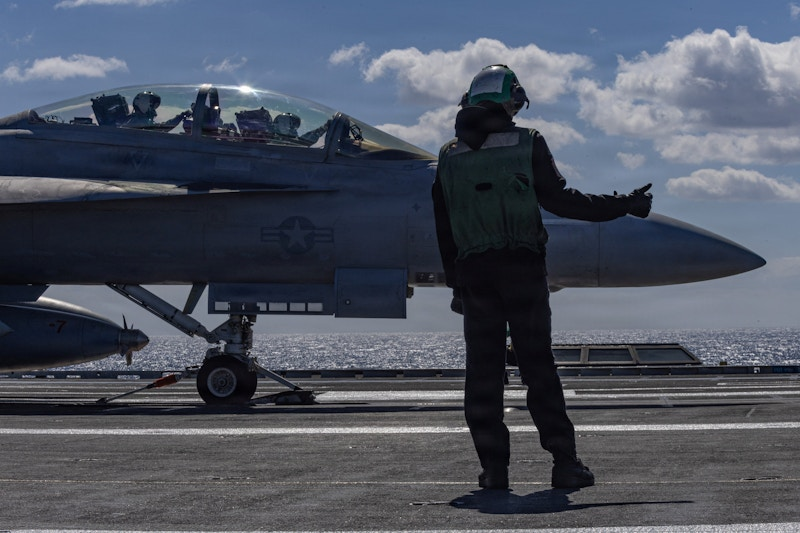
An F/A-18F Super Hornet launching from navy aircraft carrier USS Gerald R. Ford in support of Operation Epic Fury, February 28, 2026. U.S. Navy/Handout
The U.S. said it has used an array of weaponry in its aerial strikes against Iranian targets, including Tomahawk cruise missiles, stealth fighters, and for the first time in combat, low-cost one-way attack drones modeled after Iranian designs.This factbox has details on some weaponry that has been used in the attacks to date.
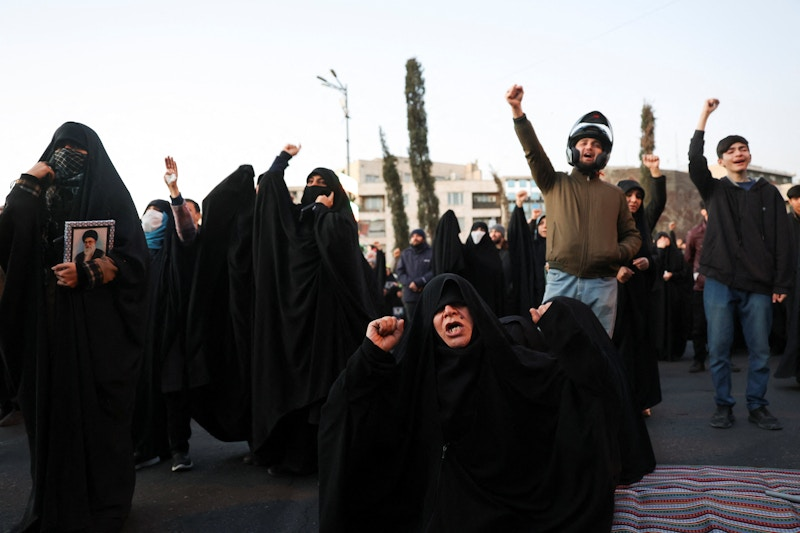
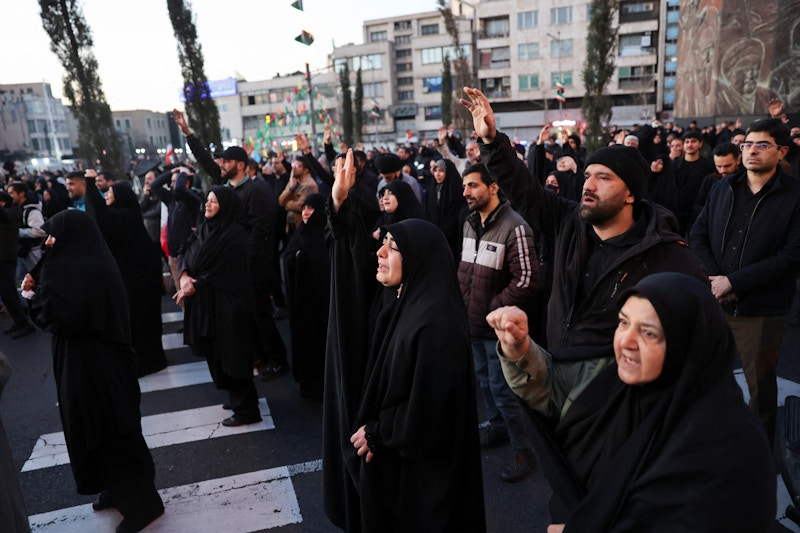
Scenes from Tehran after strikes
an hour ago04:36 CETIranian state media has now published new photos from inside the country.The photos were likely taken after the U.S. and Israeli attacks began but before Iran state media issued confirmation of Khamenei's death.Reuters does not have a presence on the ground in Iran, whose government closely monitors foreign and other media operations and broadly controls local media.
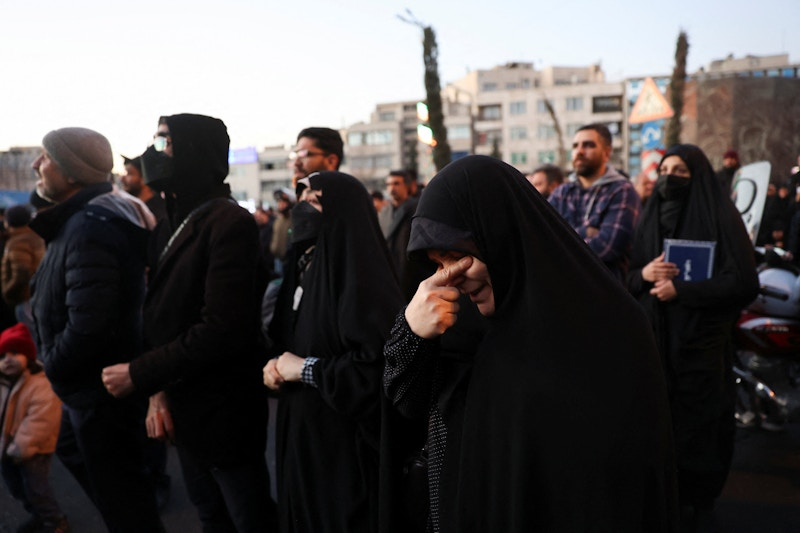
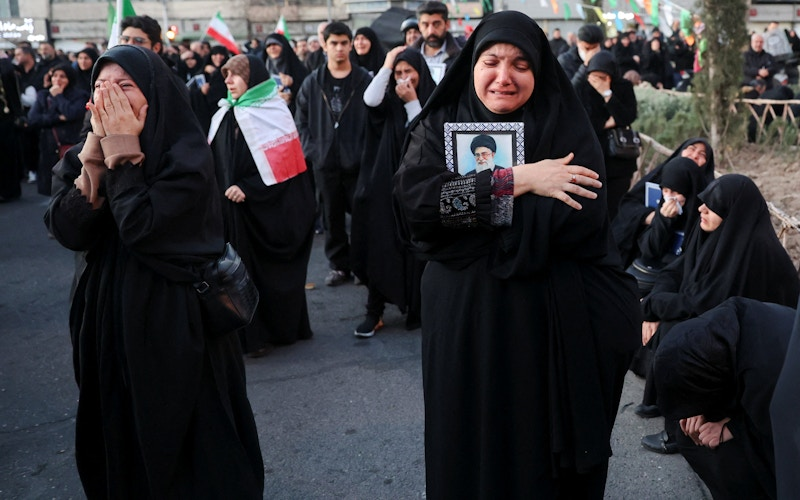
The Enghelab Square in Tehran, Iran, March 1, 2026. Majid Asgaripour/WANA via REUTERS
What to know about Reza Pahlavi
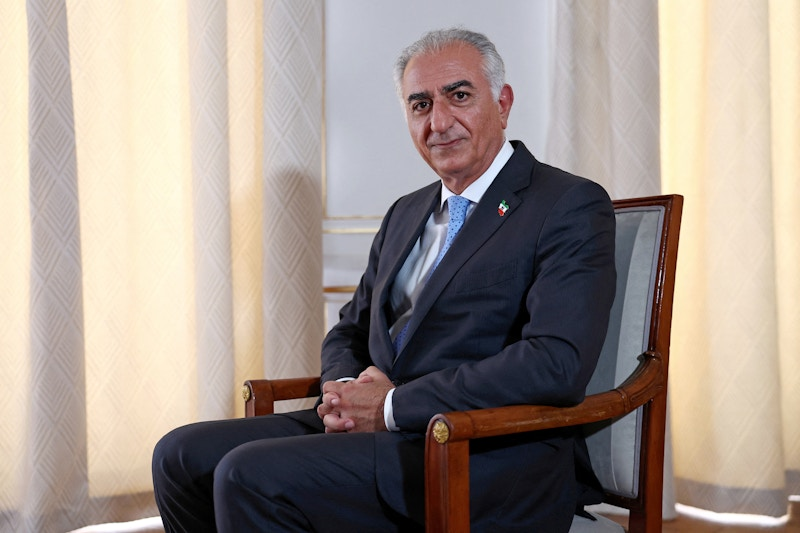
In a nation where opposition to almost half a century of clerical rule has long been fragmented, the son of the last shah of Iran has become a prominent voice, spurring on protesters. Reza Pahlavi, 65, has sought to speak as a national leader despite living outside Iran since before his father was toppled in the 1979 Islamic Revolution.
While Pahlavi has admirers in the diaspora who support a return to the monarchy, it is uncertain how popular that idea might be inside Iran. Many still remember the pre-revolutionary era’s oppression and the monarchy's lavish lifestyle. Images from his father's coronation in 1967 show Pahlavi sitting beside the jewel-encrusted throne in a child's version of the shah's uniform, gold brocades on his small shoulders. He is now married with three children and based in the U.S., but has made little progress in winning over the West. Trump said in January he was "not sure that it would be appropriate" to meet him.
Reza Pahlavi, exiled son of Iran's late Shah toppled in the 1979 Islamic Revolution, wrote an opinion piece published Saturday in the Washington Post thanking Trump.He also touted a transition plan that he says will prevent a power vacuum in Iran. However, it's unclear how feasible that plan could be since he hasn't been in Iran for more than 40 years.In an interview with Reuters in January, Trump sounded skeptical about the level of Pahlavi's support inside Iran.Pahlavi's opinion piece was published before Iran confirmed Khamenei's death after the U.S. and Israeli strikes on Iran."In announcing the strikes, President Donald Trump ... addressed the Iranian people — the regime’s longest-suffering victims — declaring that 'the hour of your freedom is at hand.'""Mr. President: Thank you. Those words gave the Iranian people strength, and I am certain they will meet this moment," he wrote.Pahlav has served as a rallying figure for some of Iran's opposition during anti-government demonstrations last month."Our path forward will be transparent: a new constitution drafted and ratified by referendum, followed by free elections under international oversight. When Iranians vote, the transitional government dissolves."Pahlavi, 65, has lived abroad for over four decades since the U.S.-backed Shah Mohammad Reza Pahlavi was overthrown in an uprising. Iran's opposition is fragmented among rival groups and ideological factions - including the monarchists who back Pahlavi.
Obituary: Khamenei's rule based on hostility to US and Israel
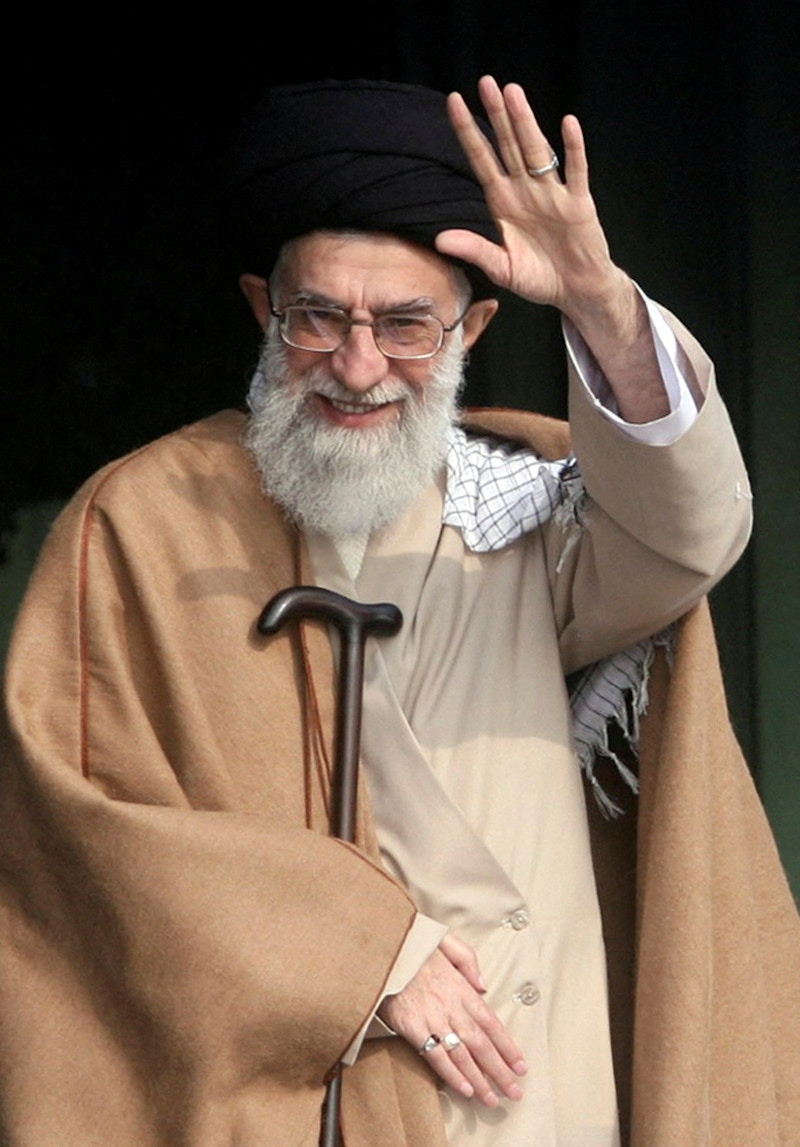
The 36-year rule of Khamenei built Iran into a powerful anti-U.S. force. He spread Iran's military sway across the Middle East, while using an iron fist to crush repeated unrest at home.The death of the 86-year-old cleric comes after decades of failed diplomatic efforts to resolve the dispute over Iran's nuclear programme.At first dismissed as weak and indecisive, Khamenei seemed an unlikely choice for supreme leader after the death of the charismatic Ayatollah Ruhollah Khomeini, who founded the Islamic Republic of Iran.But Khamenei's rise to the pinnacle of the country's power structure afforded him a tight grip over the nation's affairs.The ayatollah criticised Washington throughout his rule.As a new wave of protests spread through Iran, and as Trump threatened to intervene, Khamenei vowed in January that the country would not "yield to the enemy".Khamenei had long denied that Iran's nuclear programme was aimed at producing an atomic weapon, as the West contended.As Trump pressed Iran to agree to a new nuclear deal in 2025, Khamenei condemned "the rude and arrogant leaders of America"."Who are you to decide whether Iran should have enrichment?" he asked.Khamenei often denounced "the Great Satan" in speeches, reassuring hardliners for whom anti-U.S. sentiment was at the heart of the 1979 revolution, which forced the last shah of Iran into exile.Khamenei's death leaves an Islamic Republic wrestling with uncertainty amid ongoing attacks from Israel and the United States, as well as growing dissent at home, especially among younger generations.
Trump's big gamble in operation to kill Iran's leader
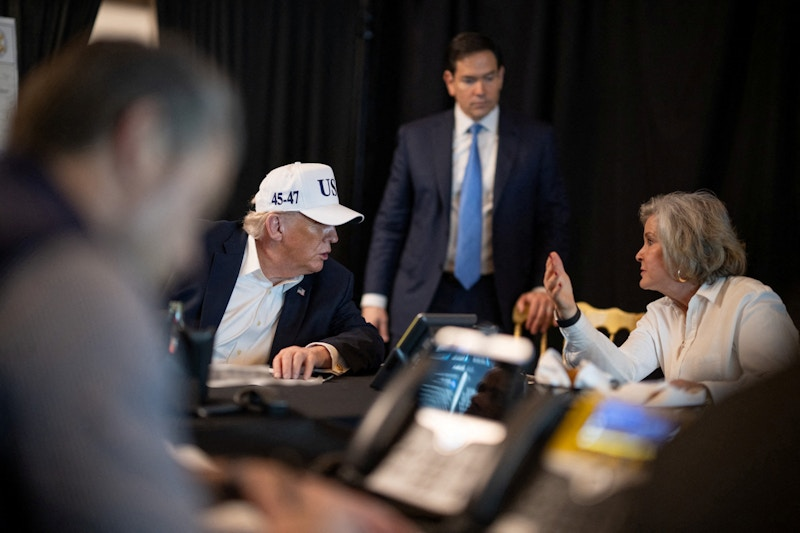
With his large-scale attack on Iran, Trump has seized a legacy-defining moment to demonstrate his readiness to exercise raw U.S. military power.But in doing so, he is also taking the biggest foreign policy gamble of his presidency, one fraught with risks and unknowns.The death of Iran's supreme leader Khamenei marks a major achievement for the operation but also leaves unanswered questions about the future of the Islamic Republic.Trump has so far provided little explanation to the American public for what could become the biggest U.S. military campaign since Afghanistan and Iraq.The president, who came to office last year promising to avoid "stupid wars," has also set out a daunting objective of regime change in Tehran, pushing the idea that air strikes can incite a popular uprising to oust Iran's rulers.It is an outcome that air power has never directly achieved in other conflicts without the involvement of an armed force on the ground. Many analysts doubt it will succeed this time in Iran.
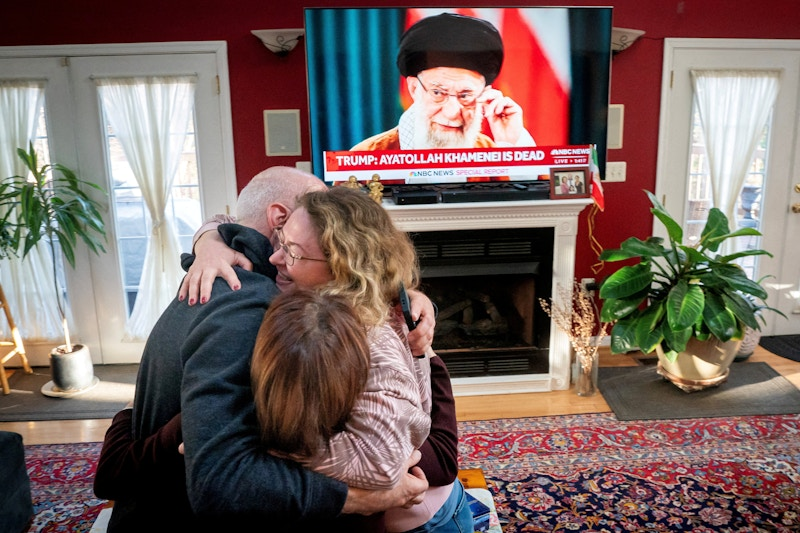
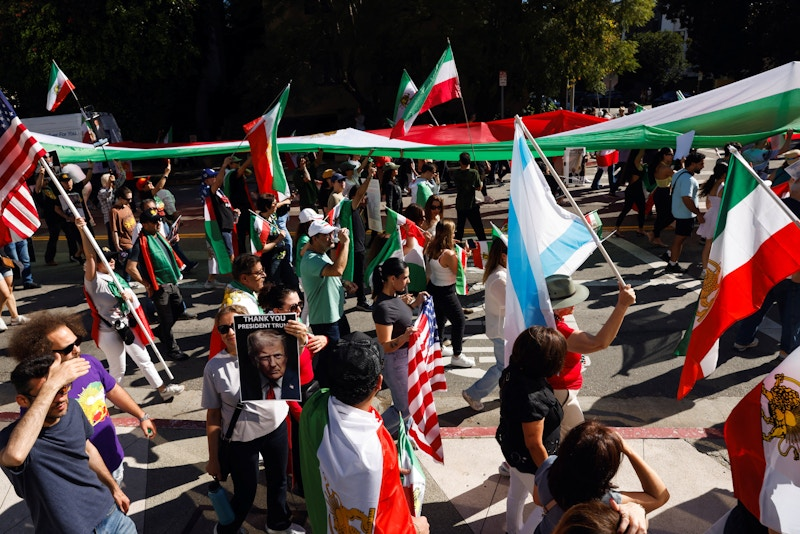
Recap: Iranian-Americans celebrate word of Khamenei's death
3 hours ago03:19 CETAfter Trump announced the death of Khamenei, some Iranian-Americans celebrated.
CIA assessed who would replace Khamenei if killed
3 hours ago03:11 CETErin BancoThe U.S. Central Intelligence Agency assessed in the two weeks prior to the attacks that if Khamenei was killed in the operation, he could be replaced by hardline figures from the Revolutionary Guards, two sources briefed on the intelligence said.The purpose of the elite military force is to protect Shi'ite Muslim clerical rule in Iran.The assessments looked broadly at what could occur in Iran following a U.S. intervention and the extent to which a military operation could trigger regime change.Figures from the Revolutionary Guards taking power was among the different scenarios that emerged from the assessments, a third source said.The Central Intelligence Agency declined to comment.
40 days of public mourning announced in Iran, state media report........
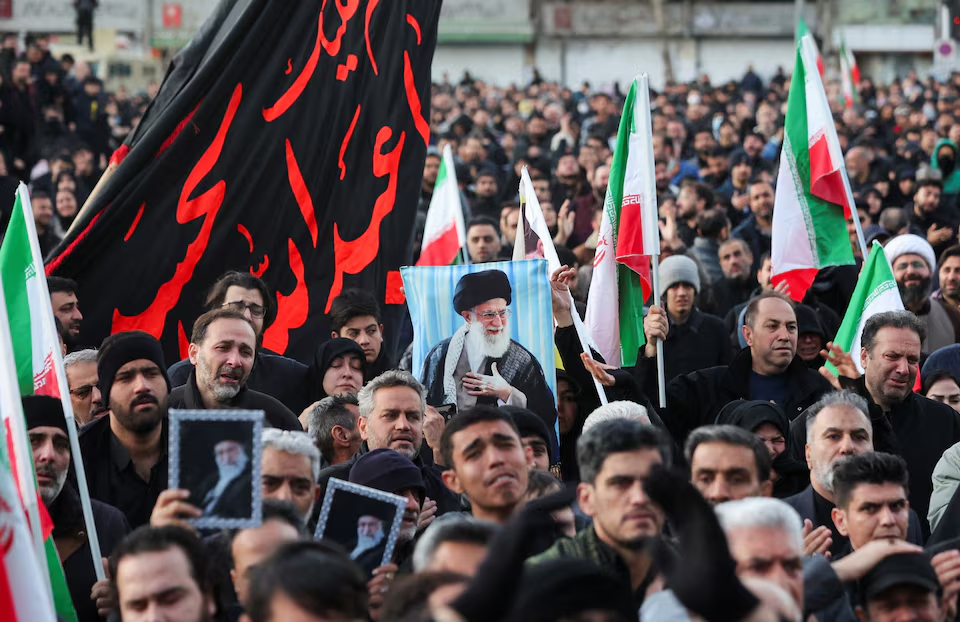
Israel said it had launched another wave of strikes on Iran on Sunday, as Iranians faced uncertainty after the killing of their supreme leader in U.S. and Israeli attacks that threatened to destabilize the wider Middle East.