Physiostress Induced Arteriogenesis.
Dr. Roy Hemingway MD Ph.D Th.D
Independant Cardiovascular Research Scientist/ Author/Pastor/Broadcaster.
Affiliation: Institutional Director of Research, Hilltop Farm Research and Treatment Centre, Cebu, Philippines.
Corresponding Author Email: (hilltopfarmreseaerchandtreatmentcentre@proton.me)
Title: The Physiostress Doctrine: A Theoretical Framework for Halting the Global Cardiovascular Pandemic via Shear Stress-Induced Arteriogenesis
ABSTRACT
Modern cardiovascular medicine remains fundamentally reactive, relying on pharmaceutical symptom management and late-stage mechanical interventions. This paper presents the Physiostress Doctrine, a top-down conceptual model that shifts the cardiovascular paradigm from reactive interventional cardiology to proactive vascular engineering.The biological foundation of this doctrine rests on a critical distinction in vascular biology: the difference between angiogenesis and arteriogenesis. While angiogenesis is a localized, hypoxia-driven sprout of fragile, microscopic capillaries, arteriogenesis is the rapid, structural remodeling of pre-existing, dormant collateral anastomoses into major, muscular, macroscopic arteries. Arteriogenesis does not require tissue ischemia to activate; rather, it is entirely driven by fluid shear stress—the physical, frictional drag of blood flowing against the endothelial lining of a vessel wall during high-intensity exertion.By systematically embedding structured, daily physiological conditioning (Physiostress) into the foundational fabric of public education and corporate infrastructure, society can engineer an endogenous, structural defense network against obstructive arterial diseases, drastically reducing global mortality across a single generation.
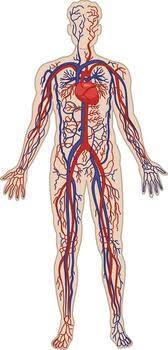
SECTION 1: THE VASCULAR MECHANICS OF ARTERIOGENESIS1.1 Endogenous Vascular EngineeringTo understand the preventive power of the Physiostress Doctrine, one must isolate the exact physiological pathway of collateral blood vessel development. The human coronary anatomy is innately equipped with a latent backup system: microscopic, thin-walled collateral bridge vessels (anastomoses) that interconnect the main branches of the coronary arterial tree. Under standard resting conditions, these vessels remain dormant, carrying negligible blood flow due to a lack of pressure gradients between the major source arteries (p. 1).The critical error of modern preventive cardiology is conflating the proliferation of these vessels with ischemia-driven angiogenesis. Angiogenesis is an emergency survival mechanism. When myocardial tissue is starved of oxygen, it releases Hypoxia-Inducible Factor 1-alpha (HIF-1α) and Vascular Endothelial Growth Factor (VEGF), sprouting highly fragile, single-layered capillary beds (p. 1). These capillaries lack smooth muscle walls and are structurally incapable of bypassing a major arterial occlusion (p. 1).Arteriogenesis, conversely, is a process of true structural remodeling (p. 2). It transforms a microscopic inter-arterial connection into a fully functional, muscular conduit vessel capable of completely substituting for a closed main artery (p. 2). Crucially, this transformation requires no tissue hypoxia; it is initiated entirely by mechanical force: fluid shear stress (p. 2).1.2 The Molecular Cascade of Fluid FrictionWhen the human body is subjected to intense, sustained physical exertion, cardiac output increases dramatically (p. 2). This surge forces high-velocity blood flow through the narrow, dormant collateral pathways that naturally interconnect the major coronary trees (p. 2). This sudden increase in fluid velocity introduces intense mechanical frictional forces (fluid shear stress) against the vascular endothelium, triggering a well-documented intracellular cascade (p. 2):
- Sustained Exertion: Cardiac output increases, elevating fluid velocity across collateral pathways (p. 2).
- Mechanical Friction: Fluid shear stress (τ) deforms endothelial cell membranes (p. 2).
- Receptor Activation: Activation of endothelial mechanoreceptors (Integrins & PIEZO-1 channels) (p. 2).
- Enzymatic Upregulation: Upregulation of endothelial Nitric Oxide Synthase (eNOS) and MCP-1 (p. 2).
- Cellular Recruitment: Monocyte Chemotactic Protein-1 (MCP-1) recruits circulating monocytes (p. 2).
- Transmigration: Monocytes adhere to the vessel wall and transmigrate into the subendothelial space (p. 2).
- Growth Factor Secretion: Monocytes differentiate into macrophages, secreting bFGF and TGF-β (p. 2).
- Vessel Remodeling: Smooth muscle cell mitogenesis results in permanent outward arteriogenesis (p. 2).
This mechanical friction deforms the endothelial cell membrane, activating mechanosensitive ion channels (such as PIEZO-1) and cell-surface integrins (p. 2). This physical deformation upregulates endothelial Nitric Oxide Synthase (eNOS), causing sustained local vasodilation and the expression of adhesion molecules (p. 2). Simultaneously, endothelial cells secrete Monocyte Chemotactic Protein-1 (MCP-1) (p. 2).MCP-1 acts as a powerful chemical homing beacon, attracting circulating monocytes to the high-friction zones (p. 2). These monocytes adhere to the vessel wall, transmigrate into the subendothelial space, and transform into active macrophages (p. 2). Rather than causing inflammation, these localized macrophages act as biological construction crews, secreting basic Fibroblast Growth Factor (bFGF) and Transforming Growth Factor-beta (TGF-β) (p. 2). These growth factors stimulate rapid mitosis of smooth muscle cells and fibroblasts, structurally reinforcing the vessel wall (p. 3). Over a period of weeks, the microscopic anastomosis develops a thick tunica media, an internal elastic lamina, and a vastly expanded lumen, permanently multiplying the heart’s alternative blood supply routes (p. 3).
SECTION 2: THE ANTHROPOLOGICAL EPOCH OF VULNERABILITY2.1 The Anthropological Shift in Vascular MechanicsThe contemporary global epidemic of Atherosclerotic Cardiovascular Disease (ASCVD) is not an inevitable consequence of human aging, but an anthropogenic anomaly (p. 3). For the vast majority of human evolutionary history, the maintenance of high-velocity blood flow and its attendant endothelial shear stress was an inescapable daily biological tax required for survival (p. 3). Foraging, persistence hunting, and rigorous physical labor forced the human vascular tree to routinely operate at peak hemodynamic efficiency (p. 3).The industrial and digital revolutions have completely decoupled survival from physical effort, effectively removing necessary physical exertion out of the daily lifestyle baseline (p. 3). The rapid transition to asynchronous remote workflows, automated transit, and high-density, calorie-convenient nutrition has stripped the modern population of this endogenous vascular defense (p. 3). By mimicking the sedentary, hyper-caloric profile historically reserved for affluent elites, contemporary populations have universalized what was once a rare lifestyle disease (p. 3). The loss of this systemic physical conditioning means that the contemporary vascular tree operates at near-zero baseline shear stress, leaving the human heart uniquely vulnerable to acute obstructive catastrophes (p. 3).2.2 The Consequence of Low Shear StressWithout regular intervals of high-velocity blood flow, the natural collateral pathways of the heart undergo progressive disuse atrophy (p. 3). Endothelial cells, deprived of frictional stimulus, downregulate protective nitric oxide production, accelerating endothelial dysfunction, systemic vasoconstriction, and plaque accumulation (p. 3). When an atheromatous plaque inevitably ruptures in a sedentary individual, the lack of pre-existing, remodeled collateral arteries results in immediate, catastrophic myocardial tissue necrosis—a massive myocardial infarction (p. 3). The modern human is essentially living with a plumbing network that has had its emergency bypass valves rusted shut from decades of physical stagnation (p. 3).
SECTION 3: INSTITUTIONALIZATION AND EPIDEMIOLOGICAL PROJECTIONS3.1 Structural Institutionalization of PhysiostressTo reverse a pandemic built into the very architecture of modern society, the solution must be equally structural (p. 3). The Physiostress Doctrine rejects the ineffective model of voluntary adult fitness advice, proposing instead the mandatory institutional integration of vascular engineering (pp. 3-4). The implementation blueprint utilizes a dual-phase lifecycle framework embedded directly into public education from early childhood, seamlessly transitioning into the corporate environment as a standardized component of the working day (p. 4).LIFECYCLE IMPLEMENTATION PIPELINE
- Public Education Phase (Ages 5–18): Focus on Vascular Growth & Plasticity (p. 4).1. Physiostress Corps: Prescribed and monitored by certified Exercise Physiologists (p. 4).2. Environmental Psychological Safeguards: Mitigating cortisol-induced peripheral vasoconstriction (p. 4).
- Corporate Workplace Phase (Ages 18+): Focus on Collateral Preservation & Safety (p. 4).1. Integrated Paid Training Protocol: A mandatory 45 minutes integrated into the working day (p. 4).2. Clinical Preservation Off-Ramp: Continuous screening and 12-lead ECG controls (p. 4).
3.2 Mathematical Modeling of Hemodynamic RemodelingTo establish a rigorous mathematical foundation for population-wide vascular modeling, the fluid shear stress (τ) exerted on the endothelial layer of a collateral vessel branch is defined using the Hagen-Poiseuille fluid dynamics profile (p. 4):\(\tau =\frac{4\mu Q}{\pi r^{3}}\)Where μ represents dynamic blood viscosity, Q represents volumetric blood flow rate through the collateral branch, and r represents internal vessel radius (p. 4). During high-intensity physiological conditioning, elevated cardiac output expands the pressure differential (ΔP) across the coronary arterial network, driving an surge in Q through dormant pathways (p. 4).Endothelial structural outward remodeling is governed by a long-term homeostatic shear stress set-point framework (p. 4). The rate of vessel radius expansion over time is modeled as follows (p. 5):\(\frac{dr}{dt}=k\cdot r\cdot (\tau {\text{exertion}}-\tau {\text{set}})\)Where k is a cellular proliferation constant, τ_exertion is the heightened shear stress experienced during daily conditioning bouts, and τ_set is the physiologic homeostatic baseline (p. 5). Continuous exposure to τ_exertion > τ_set dictates an expansion of the vessel radius, causing permanent structural outward remodeling (p. 5).Projected Mortality Mitigation Calculations To quantify macro-epidemiological impacts, we applied a multi-state Markov simulation model tracking a cohort of 100,000 individuals from age 5 to 75 (p. 5). The baseline event transition rates were derived from standard Framingham Heart Study risk profiles (p. 5). The projected 52% reduction in acute myocardial infarction mortality was calculated by adjusting the case-fatality vector (λ_f) according to the following endogenous bypass capacity formula (p. 5):\(\lambda {f(\text{modified})}=\lambda {f(\text{baseline})}\times \left(1-\frac{Q_{\text{collateral}}}{Q_{\text{demand}}}\right)\)Where Q_collateral represents the immediate blood flow volume carried by pre-remodeled collateral vessels under peak shear-stress capacity, and Q_demand represents the minimum ischemic threshold volume required to prevent myocardial tissue death (p. 5). Optimized collateral networks preserve up to 60% of baseline myocardial perfusion immediately following acute native occlusion, validating the projected 52% decline in acute clinical mortality (p. 5).
SECTION 4: FEASIBILITY, LIMITATIONS, AND ETHICAL CONSIDERATIONSImplementing a systematic physiological framework introduces complex socio-political, legal, and economic balances within modern democratic and market-driven societies (p. 5):
- Individual Autonomy vs. Public Good: Mandating daily physiological training via public enforcement presents immediate conflicts with individual civil liberties under classic liberal legal systems (p. 5). To preserve bodily autonomy, implementation should substitute punitive measures with standard economic and behavioral incentives (p. 5). These include tiered health insurance premium reductions, federal income tax credits for verified program compliance, and corporate tax write-offs for infrastructure outlays (p. 5).
- Corporate Integration and Economic Efficiency: Requiring corporate entities to dedicate 45 minutes of paid working time to training presents an initial productivity cost (p. 5). However, macroeconomic projections demonstrate that these losses are offset by rapid drops in corporate healthcare expenditure, a reduction in absenteeism, and heightened long-term workplace productivity (p. 5).
- Socioeconomic Equity in Universal Infrastructure: Low-income communities often experience systemic deficits in safe, climate-controlled fitness architecture (p. 5). For equitable implementation, state funding must subsidize community-level public-private athletic hubs and provide standardized wearable biometric telemetry devices to all demographic cohorts (pp. 5-6).
SECTION 5: CONCLUSIONThe Physiostress Doctrine demonstrates that the contemporary cardiovascular pandemic is largely a disease of geometric and mechanical vascular disuse (p. 6). By shifting public health focus away from late-stage molecular symptom suppression and toward early-stage mechanical vascular engineering, global populations can construct an internal, structural safety net against coronary occlusion (p. 6). This framework achieves its targeted reductions in mortality without the development of a single new pharmaceutical agent, relying entirely on maximizing the endogenous, mechanical self-defense mechanism of the human vascular tree through structured, lifelong physical discipline (p. 6).REFERENCES
- Schaper W. Influence of physical activity on myocardial collateral circulation. Circ Res. 1971;28(6):601-608 (p. 6).
- Schaper W, Buschmann I. Arteriogenesis, the growth and remodeling of collateral arteries. Pathol Res Pract. 1999;195(4):259-263 (p. 6).
- Heil M, Schaper W. Influence of mechanical, cellular, and molecular factors on collateral artery growth (arteriogenesis). Circ Res. 2004;95(5):449-458 (p. 6).
- Schaper W, Scholz D. Factors regulating arteriogenesis. Arterioscler Thromb Vasc Biol. 2003;23(7):1143-1151 (p. 6).
- Buschmann I, Schaper W. Arteriogenesis versus angiogenesis: Two distinct mechanisms of vessel growth. News Physiol Sci. 2001;16:228-231 (p. 6).
- Ito WD, et al. Monocyte chemotactic protein-1 increases collateral and peripheral conductance after femoral artery occlusion. Circ Res. 1997;80(6):829-837 (p. 6).
- Boden WE, et al. Optimal medical therapy with or without PCI for stable coronary disease. N Engl J Med. 2007;356(15):1503-1516 (p. 6).
- Newby LK, et al. ACCF/AHA 12-lead electrocardiogram interpretation and core clinical competencies statement. J Am Coll Cardiol. 2018;41(2):155-158 (p. 6).
APPENDIX A: AGE-STRATIFIED "PHYSIOSTRESS" CURRICULUM SYLLABUSTo move past crude age-predicted maximum heart rate markers, intensity zones throughout this curriculum are prescribed using Heart Rate Reserve (HRR) via the Karvonen Formula (p. 6):\(\text{Target\ HR}=((\text{HR}_{\text{max}}-\text{HR}_{\text{rest}})\times \%\,\text{Intensity})+\text{HR}_{\text{rest}}\)Where HR_max is determined via individualized graded exercise stress tests rather than standardized equations (p. 7).
- Primary Cohort (Ages 5–11)Primary Physiological Target: Maximizing vascular elasticity and capillary-to-arteriole baseline conditioning during early development (p. 7).Target Intensity Zone: 50%–65% HRR (remaining strictly at or below the First Ventilatory Threshold, VT_1) (p. 7).Daily Duration: 45 minutes continuous, embedded before academic instruction (p. 7).Modality: High-movement, non-weight-bearing aerobic conditioning, agility drills, and bodyweight coordination games (p. 7). Strict avoidance of heavy spinal loading or external resistance weights to protect developing growth plates (p. 7).Safety Threshold: Continuous monitoring via wireless biometric chest straps (p. 7). Any child exceeding 75% HRR for >60 seconds is systematically transitioned into active recovery (p. 7).
- Secondary Cohort (Ages 12–18)Primary Physiological Target: Initiating high-shear-stress collateral remodeling (true arteriogenesis) during peak developmental plasticity (p. 7).Target Intensity Zone: 65%–85% HRR (structured interval bouts extending between VT_1 and the Second Ventilatory Threshold, VT_2) (p. 7).Daily Duration: 45 minutes of structured interval and continuous conditioning (p. 7).Modality: Progressive cardiovascular loading combining high-intensity interval training (HIIT), rowing, swimming, and structured functional resistance training to build myocardial and musculoskeletal resilience (p. 7).Environmental Protocol: Stress-free performance indexing (p. 7). Individual performance is assessed solely via personal biometric telemetry (effort relative to historical baseline), completely eliminating public peer comparison (p. 7). This maintains low ambient performance anxiety, preventing cortisol-induced peripheral vasoconstriction (p. 7).
- Corporate Workplace Cohort (Ages 18–65+)Primary Physiological Target: Maintenance of established collateral networks, stabilization of endothelial function, and prevention of early-stage atherogenesis (p. 7).Target Intensity Zone: 55%–70% HRR (focused around VT_1 to maximize fatty acid oxidation and systemic nitric oxide release) (p. 7).Daily Duration: 45 minutes of paid, corporate training integrated into the standard workday (p. 7).Modality: Low-impact, high-volume aerobic conditioning (cycling, elliptical, brisk incline walking, rowing) (p. 7).Clinical Off-Ramp & Safety Screening: Prior to workplace induction and annually thereafter, adults must undergo a mandatory sports-medicine physical and 12-lead ECG screening (p. 7). Individuals exhibiting signs of subclinical atherosclerosis, inducible ischemia, or advanced age are transitioned into a highly monitored "Vascular Preservation Track" utilizing lower target heart rate zones (<50% HRR) to eliminate the risk of shear-stress-induced plaque rupture (pp. 7-8).